Author: adeelkhazada73

  • Where to Find a Motorcycle VIN and How to Verify It

    Where to Find a Motorcycle VIN and How to Verify It

    Every motorcycle has a unique Vehicle Identification Number (VIN) that identifies the bike’s origin, model year, engine type and production details. Knowing where to find the VIN and how to verify it is essential whether you’re buying a used bike, arranging insurance or keeping maintenance records. In this guide, VIN Survey explains where VINs are typically located, what a VIN reveals, and how to use VIN checks to protect yourself.

    What Is the VIN and Why It Matters

    The VIN is a standardized 17-character code that uniquely identifies a motor vehicle. Introduced industry-wide in 1981, the VIN contains information about the manufacturer, model year, production plant and a check digit. A verified VIN is used for registration, insurance, parts identification and theft recovery.

    What a Motorcycle VIN Can Reveal

    • Manufacturer and model year
    • Engine type, displacement and transmission details
    • Production sequence and factory origin
    • Recorded mileage entries and service history (when available)
    • Accident, salvage or theft records

    Typical VIN Locations on Motorcycles

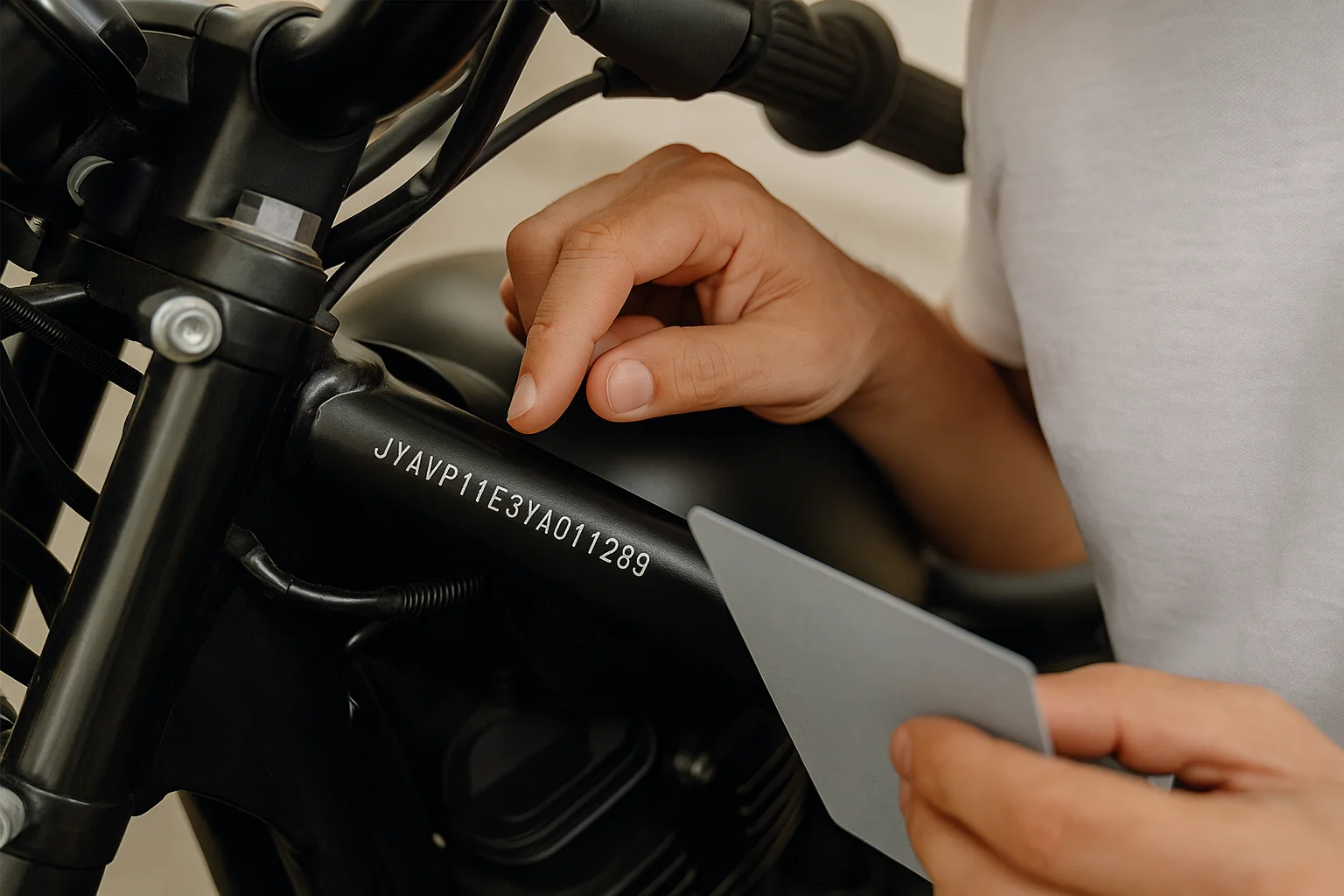
    Most manufacturers stamp or attach the VIN near the steering head, where the forks attach to the frame. However, placement can vary by brand and model. Checking common locations saves time when you need to run a VIN lookup or provide the VIN to your insurer.

    Common VIN Locations for Popular Brands

    • Honda: Right side of the steering neck or stamped on the frame near the front fork.
    • Harley-Davidson: Right side of the frame close to the steering head.
    • Yamaha: Steering head (often stamped on the right side).
    • Kawasaki: Left side of the steering head or under the seat on some models.
    • Suzuki: Steering head or on a metal plate near the frame.
    Uncommon VIN Locations (Custom & Vintage Bikes)

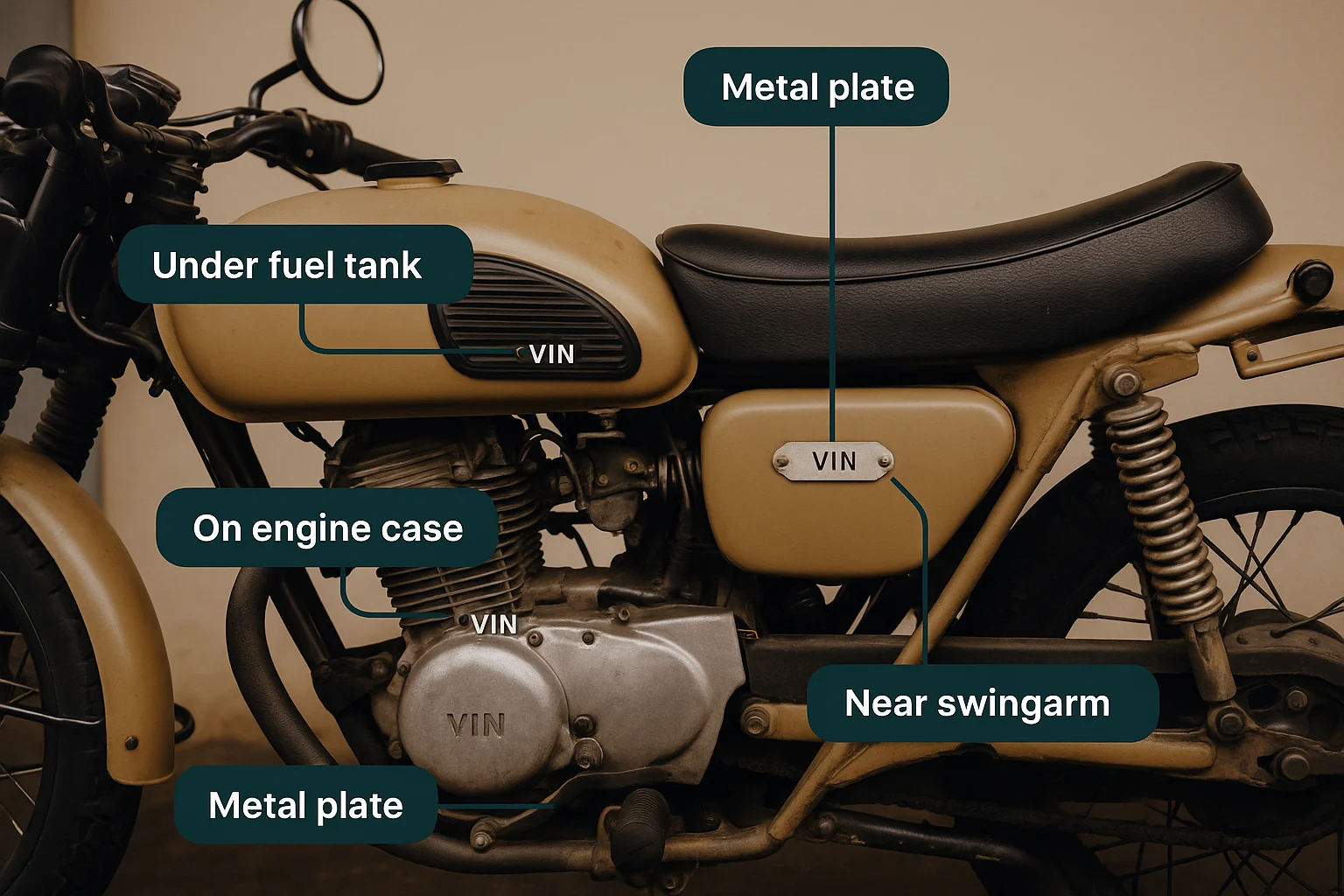
    Older or custom motorcycles may use less standardized locations. Check these spots when a VIN is not visible on the steering head:

    • Under the fuel tank or beneath the seat
    • Stamped on the engine case or transmission housing
    • On a separate metal plate bolted to the frame
    • Near the swingarm mounting points or behind the fork assembly
    Why You Should Run a Motorcycle VIN Check

    A VIN check reveals a motorcycle’s background — accident history, ownership records, recorded mileage and theft reports. This verification protects you from buying a bike with hidden damage, a rolled odometer, or a compromised title.

    Check Type Information Provided
    Basic VIN Decoder Manufacturer details, model year, engine size and factory codes.
    Standard History Report Ownership changes, title status, accident records and reported damage.
    Comprehensive Report Full history including maintenance notes, mileage verification, theft records and previous sale listings.

    Tip: A comprehensive report from VIN Survey can save you from costly surprises and help you negotiate with confidence.

    How to Protect Your Motorcycle VIN

    While mileage fraud is less common among premium vehicles, the financial impact is much greater. A small percentage of

    VINs are a critical theft-prevention tool. Protect yours with these practical steps:

    • Regularly inspect VIN plates and stamped areas for tamper marks.
    • Photograph each VIN location and store images with your insurance documents.
    • Consider VIN etching or other anti-tamper measures.
    • Store paperwork and registration in a secure place; secure your parking area with cameras where possible.

    high-value cars — even just 2–3% — can translate into massive financial losses for unsuspecting buyers.

    Summary

    Knowing where to find the VIN and how to verify it is essential for safe motorcycle ownership. Whether you’re buying used or maintaining your current bike, a VIN check from VIN Survey gives you clarity on origin, mileage and history — helping you avoid fraud, theft and costly mistakes.

    Get Your Vehicle History Report

    Starting from €39.99

    Before buying any used car, get the confidence you need with a detailed Vehicle History Report from VIN Survey. Our reports provide verified insights into a vehicle’s past — including accidents, ownership history, title records, mileage verification, and more. Make an informed decision with trusted data from VIN Survey— your reliable source for accurate vehicle history reports
    GET YOURS NOW ➔

  • The Hidden Cost of Odometer Fraud

    The Hidden Cost of Odometer Fraud: Why Budget Cars Are Often the Riskiest Buys

    Key Findings

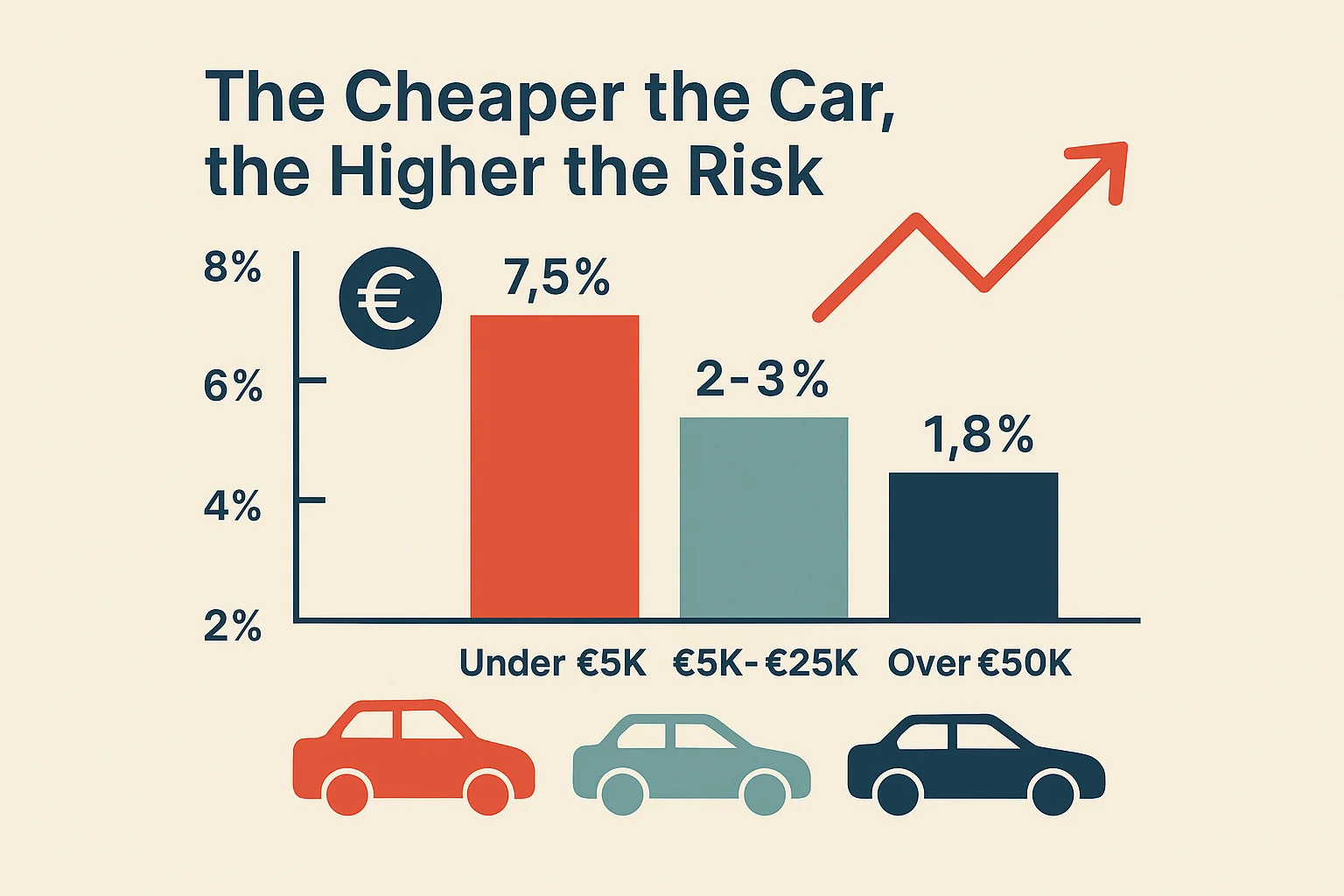
    • 7.5% of cars priced below €5,000 showed signs of odometer manipulation.
    • Ukraine reported the highest percentage of clocked vehicles under €5,000 — 15.9%.
    • Odometer rollback is most common among low-priced vehicles in Eastern Europe.
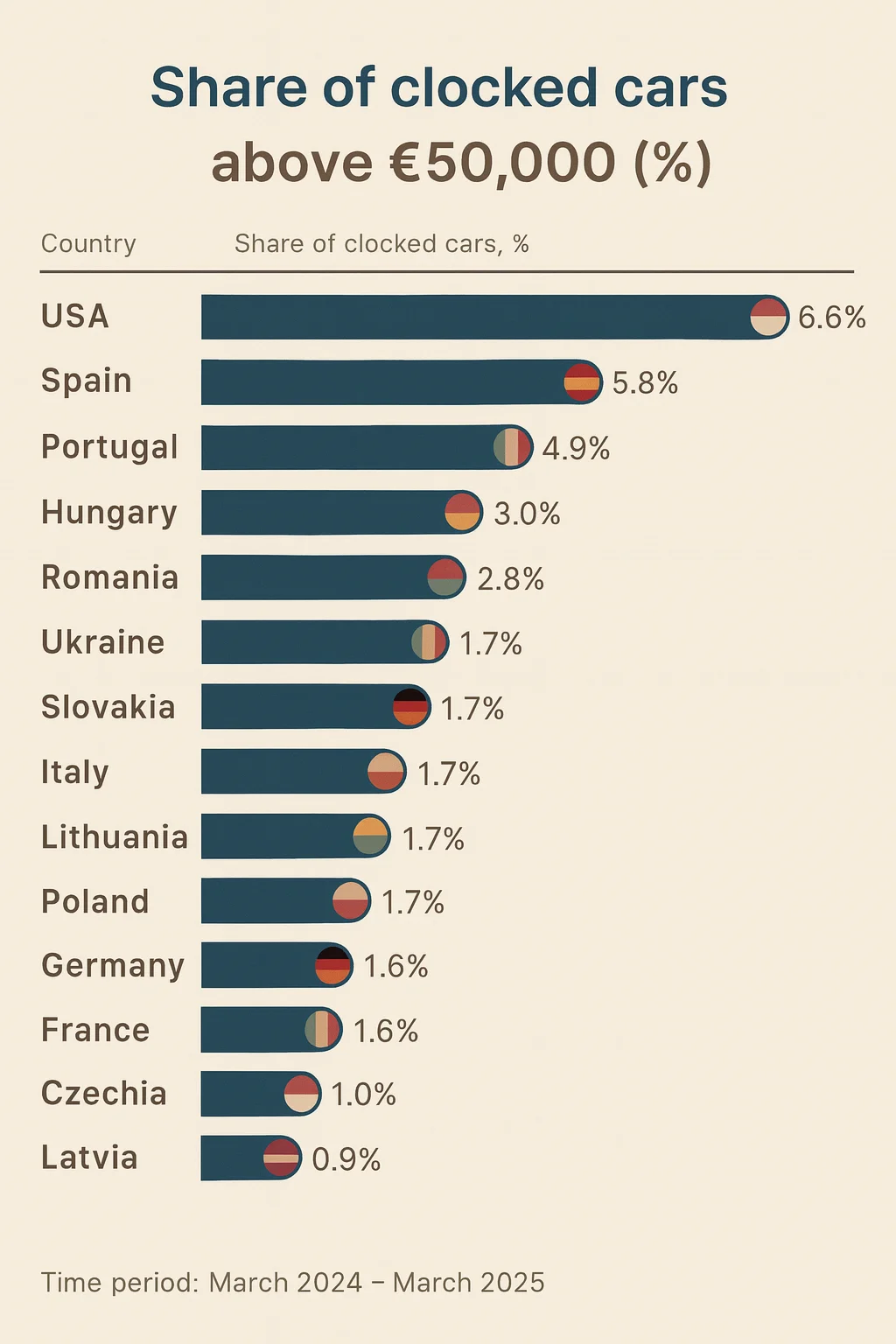
    • Only 1.8% of cars valued above €50,000 had tampered mileage readings.
    • Spain recorded the highest fraud rate among luxury cars, with 4.1% affected.

    The Cheaper the Car, the Higher the Risk

    According to VIN Survey data, the likelihood of odometer fraud decreases as the price of the car increases. Vehicles below €5,000 have the highest manipulation rate (7.5%), while those above €25,000 see a significant drop to around 2–3%. Cars over €50,000 are the least affected, with only 1.8% showing mileage discrepancies.

    Lower-priced vehicles are often sold with limited documentation or without a detailed history check. This makes it easier for dishonest sellers to roll back mileage, increasing the selling price and deceiving buyers. Many budget-conscious drivers also skip ordering a vehicle history report — a mistake that can lead to major losses later.

    “Car buyers often seek low mileage, but if that number isn’t verified, it can be misleading,” explains an automotive expert from VIN Survey. “Hidden wear and tear or mechanical issues can appear soon after purchase, leading to unexpected expenses.”

    Low-Cost Cars: A Target in Eastern Europe

    Mileage tampering is particularly widespread in Eastern European markets, though it occurs globally. Economic factors and market demand play a big role in why older, cheaper cars are clocked more frequently in this region.

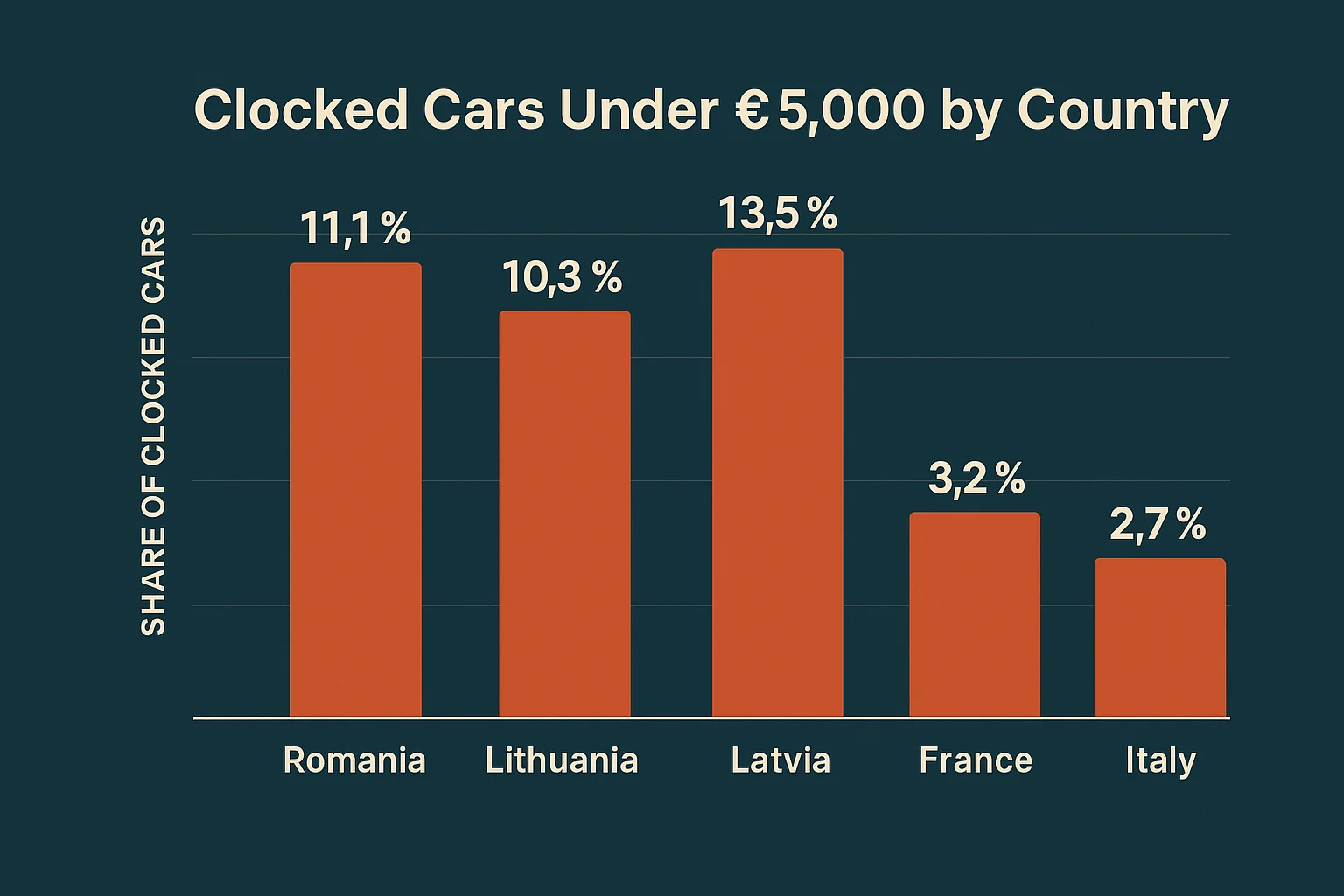
    For example, in Romania, 11.1% of sub-€5,000 cars are clocked. In Lithuania, the rate is 10.3%, and in Latvia, 13.5%. By comparison, Western European countries like France and Italy show much lower rates (around 3%).

    Buyers seeking affordable vehicles in these regions are often more price-sensitive, which ironically makes them more vulnerable to scams. A vehicle bought cheaply might cost significantly more in repairs and depreciation if it has a falsified odometer reading.

    Luxury Cars Bring Bigger Losses

    While mileage fraud is less common among premium vehicles, the financial impact is much greater. A small percentage of high-value cars — even just 2–3% — can translate into massive financial losses for unsuspecting buyers.

    For example, buying a luxury car worth €50,000 with a rolled-back odometer could mean overpaying by as much as €10,000. These vehicles may also require more expensive maintenance due to hidden wear and tear. Interestingly, Spain and Portugal lead in odometer fraud within the premium segment — 5.8% and 4.9%, respectively.

    Common Signs of Mileage Fraud

    Although it can be difficult to detect, there are several red flags that can help you spot a tampered odometer before purchasing a used car:

    • Suspiciously low price: Scammers often price vehicles lower to attract quick buyers before the fraud is discovered.
    • Worn interior parts: Excessive wear on the steering wheel, pedals, or seats can signal higher mileage than what’s displayed.
    • Seller pressure: If the seller insists on a fast sale, it might be to prevent you from running a VIN check.
    • Missing service history: Gaps or inconsistencies in maintenance records are strong indicators of potential odometer tampering.

    These signs don’t always confirm fraud, but they should encourage buyers to be more cautious. A quick VIN lookup using VIN Survey can reveal the car’s entire recorded history, helping you make a safer decision.

    How to Verify a Car’s True Mileage

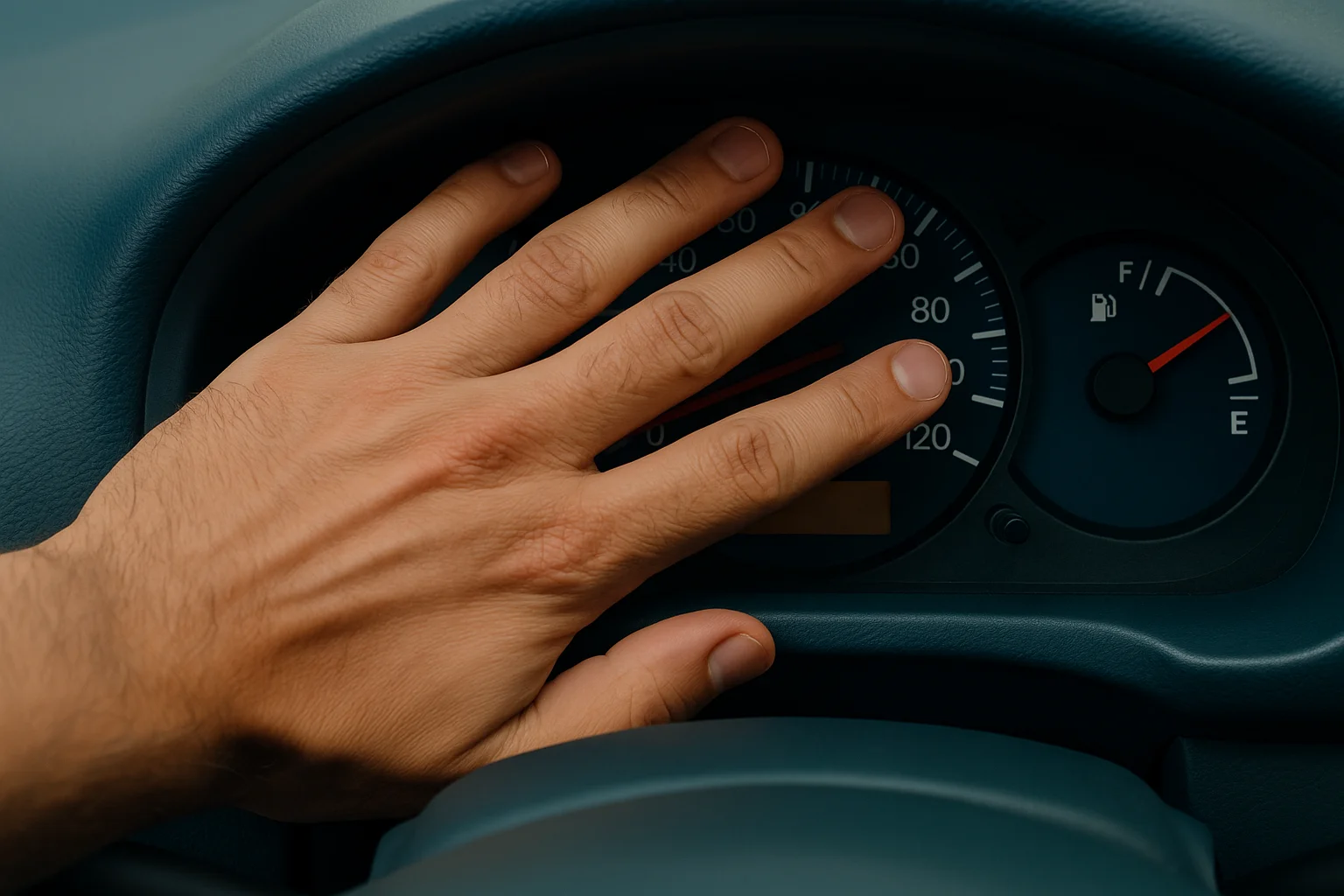
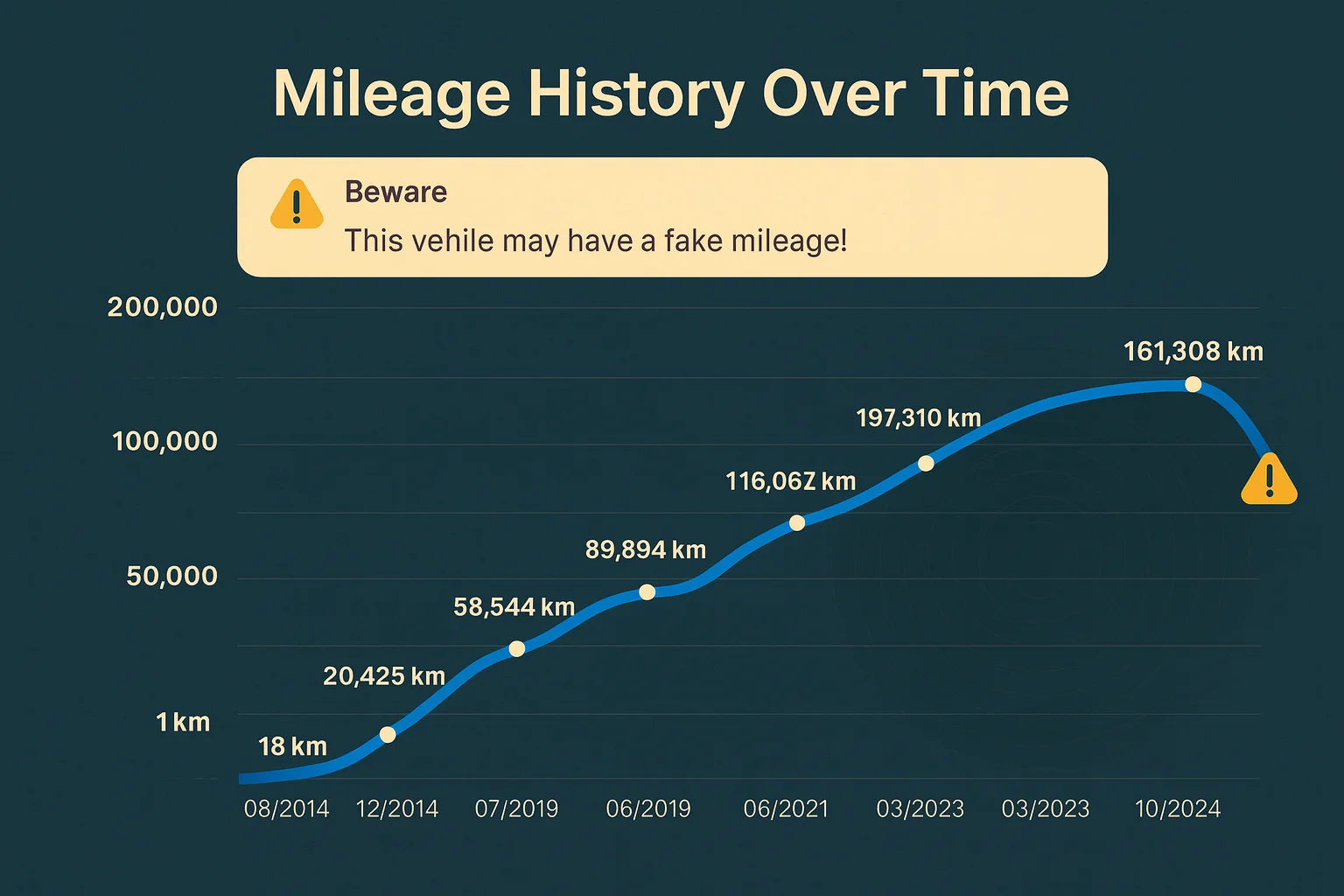
    To confirm whether a car’s odometer reading is genuine, every VIN Survey vehicle history report includes a dedicated Odometer Section. This section tracks all recorded mileage entries and displays them in a clear, visual graph.

    If a sudden drop or irregularity appears in the data, it’s a clear sign of tampering. This tool makes it easy for buyers to confirm the vehicle’s real usage before committing to a purchase — and even negotiate a fairer price if any discrepancies are found.

    Final Thoughts

    Odometer fraud remains one of the most common scams in the used car market. Whether you’re shopping for a budget-friendly ride or a premium model, always verify its past with VIN Survey. A quick VIN check can help you avoid hidden risks, overpricing, and costly surprises — ensuring your next car purchase is truly worth the investment.

    Get Your Vehicle History Report

    Starting from €39.99

    Before buying any used car, get the confidence you need with a detailed Vehicle History Report from VIN Survey. Our reports provide verified insights into a vehicle’s past — including accidents, ownership history, title records, mileage verification, and more. Make an informed decision with trusted data from VIN Survey— your reliable source for accurate vehicle history reports

    GET YOURS NOW ➔

  • The Safest Cars in Europe for 2026

    The Safest Cars in Europe for 2024

    Looking to keep your family as safe as possible on the road? You’re in the right place. Driving remains one of the most dangerous everyday activities, which is why choosing a car with excellent safety ratings is crucial. Here, VIN Survey takes a closer look at the safest vehicles of 2024, based on the latest crash tests and evaluations.

    ???? Which Car Tops the Safety Rankings?

    Not all cars are built equally when it comes to occupant protection. While modern vehicles broadly meet baseline European safety regulations, a select few go significantly further. According to Euro NCAP — the independent European body responsible for crash testing and safety assessment — the Mercedes-Benz E-Class claimed the top spot in 2024, achieving exceptional scores across adult occupant protection, child safety, and pedestrian detection.

    Volvo: The Symbol of Safety

    If safety tops your list of priorities, Volvo remains an unbeatable choice. Known for engineering excellence and innovative crash prevention systems, Volvo vehicles continue to achieve top marks across multiple safety categories.

    According to Euro NCAP test results, the following Volvo models remain some of the safest vehicles ever produced:

    • Volvo XC60 – Tested in 2017
      Overall Rating: ⭐⭐⭐⭐⭐ | Adult: 98% | Child: 87% | Pedestrian: 76%
    • Volvo XC90 – Tested in 2015
      Overall Rating: ⭐⭐⭐⭐⭐ | Adult: 97% | Child: 87% | Pedestrian: 72%
    • Volvo XC40 – Tested in 2018
      Overall Rating: ⭐⭐⭐⭐⭐ | Adult: 97% | Child: 87% | Pedestrian: 71%

    With advanced crash avoidance technology and superior passenger protection, Volvo continues to lead the way for families seeking peace of mind on the road.

    Buying a Used Car? Always Check Its History First

    Buying a used car can be tricky — many come with hidden issues such as unreported damage, rolled-back odometers, or even stolen vehicle records. That’s why it’s crucial to verify the car’s background before making any purchase.

    With VIN Survey, you can instantly access Europe’s most comprehensive vehicle history database and check important details, including:

          ✔️ Odometer Readings & Mileage History
          ✔️ Reported Accidents & Damage Records
          ✔️ Theft or Stolen Vehicle Records
          ✔️ Taxi or Rental Car History
          ✔️ Photos from Previous Listings
          ✔️ Verified Service History
          ✔️ Official State & Insurance Records

    All of this information helps you make a confident, informed decision — protecting you from scams and ensuring your next vehicle is as safe and reliable as possible.

    Get Your Vehicle History Report

    Starting from €39.99

    Before buying any used car, get the confidence you need with a detailed Vehicle History Report from VIN Survey. Our reports provide verified insights into a vehicle’s past — including accidents, ownership history, title records, mileage verification, and more. Make an informed decision with trusted data from VIN Survey— your reliable source for accurate vehicle history reports

    GET YOURS NOW ➔

  • Pre-Purchase Vehicle Inspections

    Complete Guide to Pre-Purchase Vehicle Inspections

    How a professional inspection complements a vehicle history report and protects you from costly surprises.

    A qualified technician performs a thorough pre-purchase inspection.

    Even the most detailed vehicle history report can’t reveal everything about a used car. A pre-purchase inspection (PPI) identifies hidden damage, flood signs, worn components, and other issues that may not be visible in paperwork or photos. Combining a VIN Survey vehicle history report with a professional inspection gives you the full picture before you buy.

    When You Should Get a Pre-Purchase Inspection

    A PPI is recommended when any of the following apply:

    • Buying from a private seller, independent dealer, or auction.
    • Service history is incomplete or missing.
    • The vehicle is older or high-mileage and no longer covered by warranty.
    • You’re pressured to decide quickly by the seller.
    • The asking price looks unusually low for the model and condition.

    Why inspections matter

    A professional inspection uncovers issues that a VIN report or quick visual check can miss — enabling you to negotiate, budget for repairs, or walk away from a risky purchase.

    Red Flags Sellers May Hide

    Sellers sometimes conceal defects. A trained mechanic can spot these warning signs early so you make an informed decision.

    Warning Sign What It May Indicate Estimated Repair Range
    Mismatched panels / paint Past collision repairs $2,000 – $15,000
    Oil stains under hood Engine or gearbox leaks $500 – $5,000
    Uneven tire wear Alignment or suspension issues $800 – $3,000
    Musty odor / water stains Possible flood damage $5,000 – $20,000
    Poor response on road test Hidden engine or transmission faults $2,000 – $8,000

    Types of Pre-Purchase Inspections

    Basic Visual Inspection

    A quick check focused on obvious issues — suitable for an initial screen but not a substitute for professional diagnostics.

    • Exterior: rust, dents, paint condition.
    • Interior: upholstery, electronics, controls.
    • Under the hood: fluid leaks, belts, hoses.
    • Tires: tread depth and even wear.
    • Lights and basic electrical functions.

    Full Mechanical & Electrical Inspection

    Comprehensive testing of all major systems using professional diagnostic tools. Ideal for higher-risk purchases or expensive models.

    System What Inspector Checks Tools / Methods
    Engine Compression, leaks, operation Scanner, pressure gauges
    Transmission Fluid condition, shifting Test drive, fluid analysis
    Brakes Pad thickness, rotors, system Brake gauges, visual checks
    Suspension Components, alignment Lift inspection, bounce test
    Electrical Battery, charging, electronics Multimeter, scanner

    Mobile Inspections vs. Shop Inspections

    Mobile inspectors come to the vehicle and are convenient for busy buyers. Shop-based inspections often include lift access and a deeper diagnostic review. Both options are valuable — choose based on your schedule and how thorough you want the check to be.

    DIY Check vs. Professional Inspection

    Doing your own basic checks is useful for spotting obvious problems, but certified mechanics provide the expertise and tools required to uncover complex issues.

    Aspect DIY Check Professional Inspection
    Cost Free (your time) $150 – $500
    Equipment Basic tools, flashlight Professional diagnostic tools
    Coverage Surface-level Comprehensive systems analysis
    Documentation Personal notes Formal written report with photos

    Typical Inspection Packages & Costs

    Packages vary by provider and location. Below are typical ranges to help you budget:

    Package Price Range Duration Includes
    Basic Visual $50 – $100 30–45 min Exterior, interior, basic checks
    Standard PPI $150 – $300 1–2 hrs Mechanical systems, road test
    Comprehensive $300 – $500 2–3 hrs Diagnostics, lift inspection
    Luxury / Specialized $400 – $800 3–4 hrs Brand-specific checks

    How to Arrange a Pre-Purchase Inspection

    1. Find a reputable mechanic or inspection service in your area.
    2. Share the vehicle details and any concerns (VIN, mileage, seller info).
    3. Schedule a convenient time and decide on a mobile or shop inspection.
    4. Be present if possible to ask questions during the inspection.
    5. Request the written report with photos and recommendations.

    Using the Inspection Results

    Inspection reports help you separate minor issues from major defects and guide negotiation. Use the findings to:

    • Negotiate a lower price or request repairs before purchase.
    • Budget for immediate and long-term maintenance.
    • Walk away if critical problems exceed your risk tolerance.
    • Ask for warranty coverage or seller guarantees where possible.

    Summary

    A pre-purchase inspection is a small investment that can save you from unexpected repair bills and safety issues. Combine a VIN Survey vehicle history report with a professional inspection to buy with confidence and avoid costly surprises.

    Get Your Vehicle History Report

    Starting from €39.99

    Before buying any used car, get the confidence you need with a detailed Vehicle History Report from VIN Survey. Our reports provide verified insights into a vehicle’s past — including accidents, ownership history, title records, mileage verification, and more. Make an informed decision with trusted data from VIN Survey— your reliable source for accurate vehicle history reports


    GET YOURS NOW ➔